Demystifying the Cloud: An Architectural Blueprinted Guide to AWS and Cloud Computing Foundations
By Badri Tamang | Published: May 2026
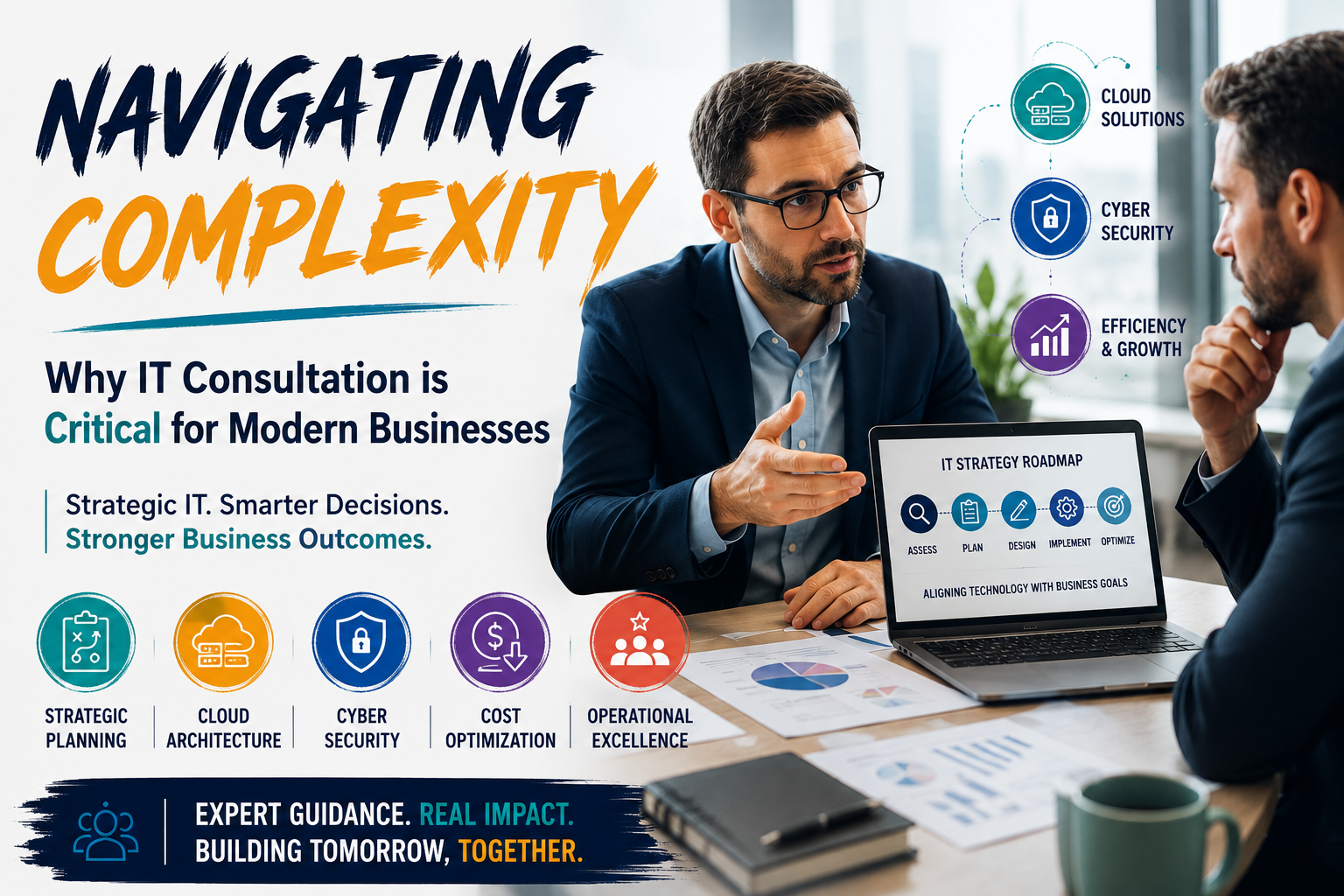
Technology is no longer just an administrative tool quietly operating in the background of an office. Today, it functions as the operational nervous system of every modern business.
Corporate spending on technology now exceeds trillions of dollars globally, yet despite massive investments, many organizations continue to struggle with failed digital transformation projects, disconnected software systems, rising operational costs, and expanding cybersecurity risks.
In 2026, buying advanced technology is no longer enough to create competitive advantage. Cloud platforms, AI-powered software, and enterprise automation tools are widely accessible to everyone. The real advantage comes from strategic integration, governance, and architectural execution.
The businesses that succeed with technology are not the ones buying the most tools — they are the ones building the strongest operational architecture behind them.
Independent IT consultation has evolved from an optional business expense into a critical operational safeguard that helps organizations align technology investments with long-term business goals.
1. Bridging the Gap Between IT Support and Enterprise Architecture
One of the most common misconceptions in business leadership is assuming that an internal IT department alone can oversee enterprise-scale digital transformation initiatives.
Internal IT teams are essential for maintaining daily operations — resolving technical issues, managing user devices, supporting networks, and ensuring operational continuity.
However, enterprise architecture requires a completely different perspective. Large-scale system integration, cloud migration planning, workflow redesign, cybersecurity governance, and AI automation frameworks demand dedicated strategic engineering oversight.
External IT consultants provide objective, cross-industry expertise gained from working across multiple enterprise environments and technology ecosystems.
Real-World Example: The Problem of Software Silos
Consider a logistics company where the sales department uses one customer platform, warehouse operations rely on a separate inventory system, and finance teams operate on legacy billing software.
Without centralized integration planning, employees are forced to manually transfer information between systems, creating delays, duplication, and operational errors.
An IT consultant approaches the organization horizontally rather than departmentally. Instead of introducing yet another isolated software platform, they architect secure middleware integrations that automate data flow between systems and eliminate manual bottlenecks.
2. Managing Autonomous Systems and AI-Driven Operations
Modern businesses are no longer deploying software solely for human interaction. Organizations are increasingly implementing autonomous AI-driven workflows capable of making operational decisions without continuous human involvement.
These systems can process invoices, negotiate vendor pricing, analyze customer behavior, update databases, and trigger cloud automation pipelines entirely on their own.
While automation dramatically improves operational speed, it also introduces serious governance risks. Autonomous systems replicate mistakes instantly, execute flawed logic perfectly, and can silently amplify operational failures at scale.
Human-in-the-Loop Governance
Strategic IT consultation helps organizations determine which business processes can safely operate autonomously and which require mandatory human approval checkpoints.
High-risk activities such as financial transactions, employee record modifications, or regulatory reporting often require layered approval controls before automated execution is permitted.
Data Lineage and Auditability
Consultants also design traceable data lineage structures so organizations can identify precisely how an automated system reached a particular decision or generated a specific outcome.
This level of visibility becomes essential for compliance, forensic analysis, and operational accountability.
External Trust Boundaries
Modern business systems constantly exchange data with third-party platforms through APIs and cloud services. IT consultants help define strict access boundaries that limit what external systems can read, modify, or execute within internal company environments.
3. Designing Cybersecurity to Outpace Automated Threats
In older IT environments, cybersecurity was often treated as an afterthought — implemented only after systems were already deployed into production.
In today’s cloud-driven world, that approach is no longer sustainable. Modern attack surfaces evolve rapidly, and automated exploitation bots can discover exposed vulnerabilities within minutes of deployment.
Strategic IT consultation introduces a Secure-by-Design methodology where protection mechanisms are integrated directly into system architecture from the beginning.
Micro-Segmentation
Consultants design networks using isolated segmentation models that restrict lateral movement inside corporate environments.
If one department or endpoint becomes compromised, attackers cannot freely pivot into sensitive systems such as finance, customer databases, or operational infrastructure.
Zero Trust Identity Architecture
Modern security models no longer assume trust based on network location. Every user, device, and application must continuously authenticate and validate access requests before interacting with protected resources.
Continuous Configuration Monitoring
Cloud environments change rapidly. Automated monitoring systems continuously scan infrastructure for unauthorized changes, accidental public exposure, or insecure configurations and remediate risks before they become exploitable.
4. Financial Governance and FinOps Optimization
Rapid technology adoption without financial oversight often leads to severe operational waste.
Many organizations lose a significant portion of their cloud budgets to idle infrastructure, oversized compute resources, duplicate software subscriptions, and unmanaged testing environments.
IT consultants introduce mature FinOps (Financial Operations) practices that align cloud consumption with measurable business value.
Infrastructure Auto-Scaling
Instead of running servers at full capacity continuously, consultants implement automated scaling policies that dynamically adjust infrastructure based on real-time traffic and workload demand.
Automated Data Lifecycle Management
Older and infrequently accessed data can automatically transition into lower-cost storage tiers, significantly reducing long-term cloud expenses.
Centralized Vendor Governance
Organizations frequently purchase overlapping software tools across departments without realizing it. Centralized governance helps eliminate duplication, negotiate enterprise licensing discounts, and streamline operational efficiency.
The Path Forward: Strategy Before Technology
The real value of IT consultation is not simply deploying software or configuring infrastructure. The most critical work happens long before implementation begins.
Effective consultants translate complex technical possibilities into predictable business outcomes, helping organizations avoid expensive mistakes while building scalable and resilient digital ecosystems.
Technology investments without architectural planning, governance, and operational strategy often create more complexity than value.
By partnering with experienced IT consultants who bridge business objectives with engineering execution, organizations ensure that innovation remains secure, measurable, sustainable, and aligned with long-term growth.
Design your strategy before deploying your tools, build governance alongside innovation, and never allow technology adoption to outpace operational visibility.




3 Comments
Daniel Brooks
Excellent explanation of the difference between operational IT support and enterprise architecture. Many businesses underestimate the strategic role of IT consultation.
Priya Sharma
The section on autonomous systems and governance is extremely relevant. AI-driven workflows without proper oversight can become operationally dangerous very quickly.
Michael Tan
Strong emphasis on FinOps and secure-by-design architecture. This reflects the real-world discipline required to manage modern enterprise technology environments effectively.